
October 01, 2025
By Paul Verchere x Blackfish Paddles
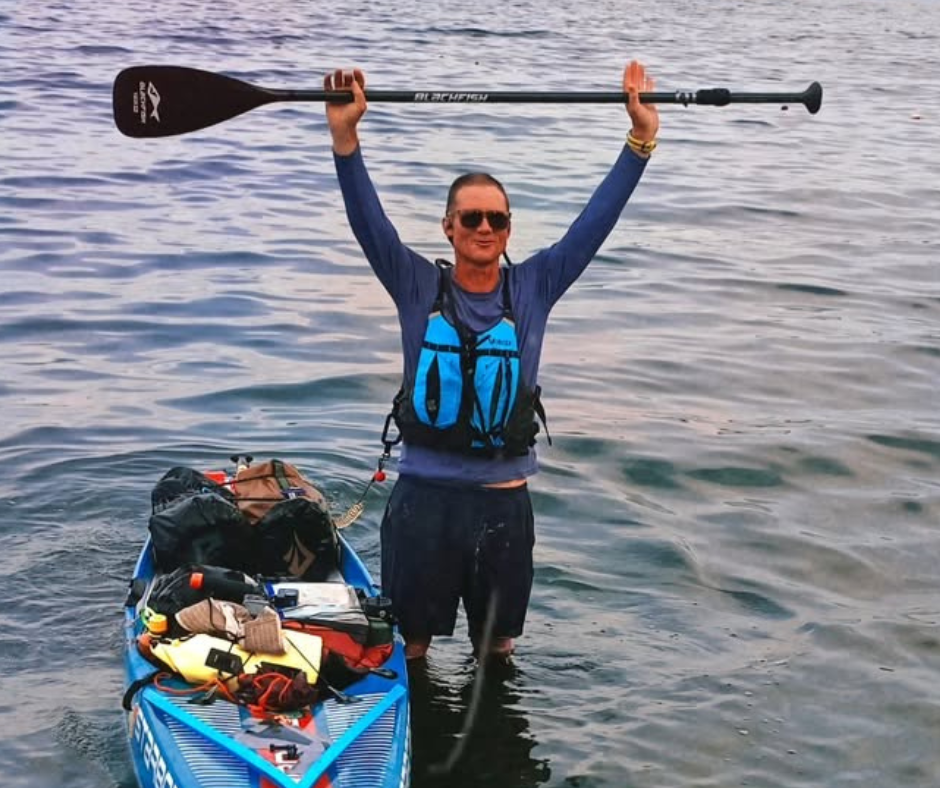
Paul Verchere shares his honest, life-defining experience on a solo, unsupported SUP expedition around the remote north end of Vancouver Island. Powered by the Blackfish Yukon paddle, he’s tested his limits, embraced wilderness, and redefined what adventure means.
Thirteen years ago, during a surf and yoga retreat in the Philippines, Paul Verchere was introduced to stand-up paddleboarding by surf legend Corey Wills. Though initially sceptical, he quickly found the sport more challenging and rewarding than expected, enjoying the new perspective it gave him over coral reefs. Later, inspired by his mother’s move to a waterfront home near Ladysmith, Canada, Paul bought his first touring board and started paddling locally. What began as casual outings soon grew into serious long-distance adventures, including a 43km circumnavigation of Valdes Island - igniting a lasting passion for paddleboarding.
We caught up with Paul as he shares his honest, life-changing experience on a solo, unsupported SUP expedition around the remote north end of Vancouver Island. Powered by the Blackfish Yukon paddle, he pushed his limits, embraced the wild, and redefined what adventure truly means.
Hi Paul, what drew you to stand-up paddleboarding after your injury, and how did it differ from the adrenaline-fueled sports you came from?
I’ve always had natural endurance. Growing up, I competed in cross country running, then got into road and mountain bike racing. But it was ski touring - especially in the Alps and Andes—that really captured my heart. As an ex-ski racer and competitive freeskier, I loved the uphill for its peace, route-finding, and cardio challenge.
When I was teaching yoga in Bangkok, ski touring was no longer an option. My ankle, broken mountain biking 20 years earlier, had worsened with osteoarthritis, making skiing impossible. I was walking with a painful limp. So besides yoga and Pilates, I did tons of indoor cycling and, whenever possible, paddleboarded in the heat and humidity on the Chao Phraya River or Taco Lake. What links paddleboarding, ski touring, and yoga for me is their meditative quality - connecting body, breath, and mindful movement.
Circumnavigating Vancouver Island solo in 36 days is an incredible feat. What mental strategies helped you push through relentless winds, waves, and solitude?
Honestly, solitude never bothered me much. The island is full of life - bald eagles watching, kingfishers calling, seals, sea otters, sea lions visiting daily, plus magical sightings of porpoises, dolphins, orcas, and whales. Onshore, black bears and even elusive Vancouver Island wolves would cross my path. Their haunting howls often serenaded my camps.
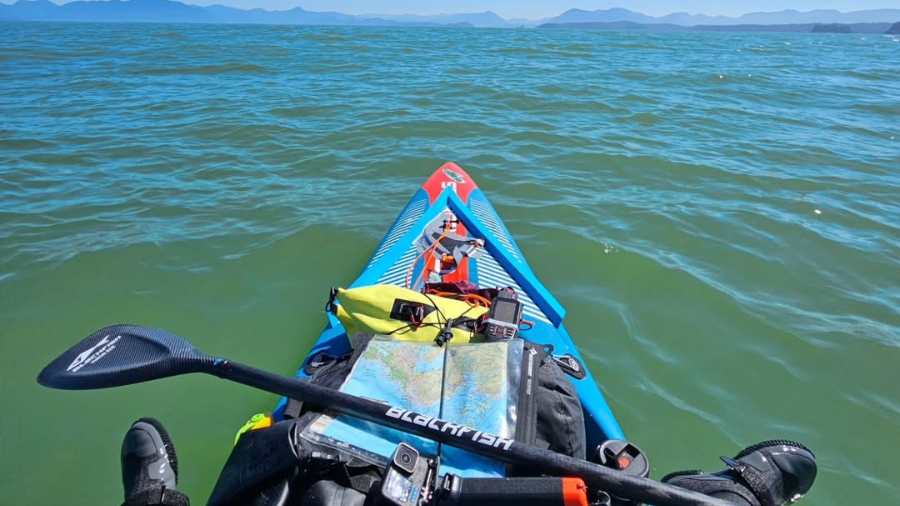
But headwinds were brutal. I battled them 80-85% of the time. On the east coast, winds forced me to reroute through the longer Discovery Passage. Some nights, listening to weather forecasts predicting nonstop 35-40 knot winds, I wondered if I’d have to quit. I heard sailors mooring up, advising me to rest. But I switched off the radio, got back on the board, and kept paddling into the wind, sometimes just for exercise.
Knowing mornings brought calmer winds, I often rose before dawn, packing and launching by headlamp. Progress was measured in inches: inching forward, sometimes standing still or slipping backward. I'd yell at the sky for a “lull,” hoping for a break to round a point and find shelter. I hugged shorelines, hid behind islands and rocks, and used my paddle to fend off jagged edges, fighting wind and waves all day.
You faced more than ocean challenges - you encountered bears and wilderness too. Can you share a moment where nature’s power and beauty struck you?
After a tough round of Cape Scott, I camped in a small cove at Saint Joseph’s Bay. Offshore, gale-force winds whipped up 3-meter waves. I was anxious watching the whitecaps with binoculars. Sharing the beach with a large black bear, we kept distance, but it clearly wanted my campsite. After hours, I realized there wasn’t room for both of us. I packed up quickly, heading south to Raft Cove, knowing it was safer.
The wind pushed me along calm waters, but as I prepared, my GPS showed speeds over 10 km/h before I even started paddling. The next day’s downwind paddle to Winter Harbour was much tougher - stronger winds and massive waves made course corrections nearly impossible. I had to line up the board perfectly with the wind behind me and just “point and shoot.”
At one low point, swamped by waves and fighting to keep my balance, I felt utterly exposed and vulnerable - alone in a wild sea. Then, unexpectedly, a humpback whale breached just ahead, framed by a rainbow halo of spray. That moment lifted my spirits, and I shouted a joyful “F*** yeah!” to the universe. It was the perfect reminder of why I do this.
How has this journey changed your relationship with your body and limits after your injury?
I’ve learned patience - patience with healing, with my body, and with the weather. Early on, my back was sore and cramping badly; some days I could barely stand. Yoga helped me recover each evening. Slowly, I felt stronger and more capable, turning into a paddling machine by the end, with less body fat and more endurance. I’m healthier now than I’ve ever been.
After years of injury, surgery, and relearning to walk, I realize there’s nothing more valuable than health. I’m lucky to have my mobility back, and when you do, you’ve got to use it.
What do you hope others - athletes or anyone facing setbacks - take from your experience?
Take it one day, one stroke at a time. Planning is key, but don’t get caught up in worrying about what might happen. I spent too much time agonizing over what never came to pass.
Like Tolkien said (with some apologies), “It’s a dangerous business, going out your door. You step onto your board, and if you don’t keep your feet, there’s no knowing where you might be swept off to.” That spirit of adventure is there for everyone.
You completed this epic journey powered by Blackfish paddles. Tell us about your setup and why you chose it.
I trained with a Blackfish Nootka 520 three-piece I keep packed with my Starboard ISUP for travel. It was my backup paddle during the Vancouver Island trip - I never had to use it, thankfully.
For the entire 1300 km journey, I used the two-piece Blackfish Yukon 520. It’s incredibly light yet powerful - like Thor’s Mjölnir. It wasn’t just a tool - it was an extension of my body, a trusted friend on every stroke.
Follow Paul on Instagram.
Revisit Paul’s national news coverage:
CBC National with Ian Hanomasing